

By: Steven E. Zeller, CExP, CEMC, CFP, NQDC, AIF
If you’re a business owner who is considering efforts to plan your business exit, you may find this article interesting. Or maybe you’re someone who isn’t necessarily interested in selling the business in the foreseeable future but would rather treat your company as an asset class within your personal wealth and build its value.
Either way, I’d like to suggest you consider implementing a process that focuses on building your company’s “Strategic Capacity,” which is a very effective approach to accommodating either of these objectives.
When it comes to business exit planning, the owner needs to be aware of some statistical data points: 100% of business owners will leave their businesses, whether planned or otherwise; 79% of business owners plan to exit their businesses in the next 10 years; 80% of business owners believe that a successful exit will result from planning and the action items they implement. Unfortunately, only 17% of business owners have created a written exit plan, which takes 3 to 5 years to implement.
Some other challenges: Most business owners don’t know what their business is accurately worth, or worse, they’re under the impression that its value is notably higher than what they can obtain in a bonified sale. Secondly, only 30% of businesses that are put up for sale actually find a buyer, leaving most owners without an exit that is based on their terms.
When it comes to a comprehensive financial plan or especially a more strategic planning process such as a business exit plan, the exit plan is 20% plan and 80% implementation. I can’t readily confirm those numbers, but you get the point. A well-thought-out strategic implementation is where the rubber meets the road, and things really happen. A written plan without implementation is a dream.
But what if you’re a younger business owner, or an owner who doesn’t necessarily want to sell at this point or anytime in the near future? Instead, what if you were to view your business as an investment asset class and focus on increasing what is probably your greatest asset? In fact, an owner could even hold this viewpoint if he or she is of the business exit age – Why not build a valuable, profitable, growing firm that operates smoothly without you? Then, conceivably resign as CEO, continue to own the firm or be a majority shareholder, and remain on as Chairman of the Board. Why not? Go and enjoy life.
One way to pursue either of these objectives is to build your company’s Strategic Capacity.
What is Strategic Capacity?
Strategic Capacity is your company’s ability to generate predictable and sustainable growth in revenue, profits, and transferable value, independently of any one leader. Implementing this approach closely aligns with the criteria a 3rd-party prospective buyer or private equity firm would use to evaluate your company when considering whether to purchase it.
There are three dimensions of Strategic Capacity:
- Predictable profits and cash flow.
- Predictable sustainable growth
- Predictable Transferable Value
All three components generate confidence within the marketplace.
The dimension of Predictable Profits & Cash Flow focuses on creating consistent profitability and reliable cash flow. The key ideas are strong margins and financial discipline, recurring or predictable revenue streams, effective leadership and operational execution, and loyal and productive employees.
The goal is to create a stable financial foundation so the business can fund growth and withstand shocks.
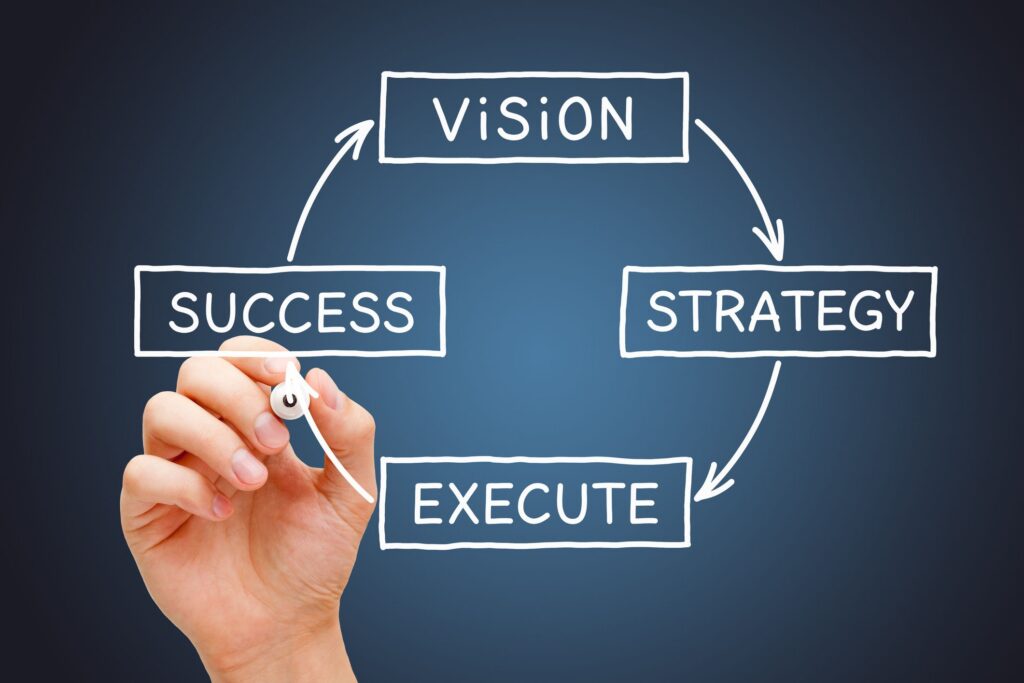
The dimension of Predictable Sustainable Growth is addressing the business’s ability to grow revenue and profits over time. Key areas to address include a clear strategy, vision, and mission; effective sales, marketing, and customer success systems; a Defensible market position; and a strategic culture and scalable operations. When an owner dedicates time and focuses on these areas with an experienced professional, great progress can be made.
Focusing on these key areas helps ensure growth is repeatable and not dependent on luck or one person.
The third dimension is the Predictable Transferable Value of the company. How valuable is the company to an outside buyer, and does the owner have a strong grasp of what that value is?
The key areas to work within this dimension are: Whether the business can operate without the founder; clean financial reporting and governance; documented processes and systems; strong brand, Intellectual property, and contracts; and diversified customers and reliable revenue.
The goal is confidence that the business will continue generating growing free cash flow under new ownership, which is what drives acquisition value.
It is important to work with professionals who are trained in Strategic Capacity. There are eight elements per dimension. It is critical that you deploy a process that not only helps you address these areas but also effectively measures the strength and/or improvement in each of them. A good goal is to rank in the top 15% within the company’s industry for each area within each dimension. It will likely make a tremendous impact on the value of your business.
If the owner is dedicating this effort to an eventual business exit, it is a great opportunity to focus on achieving it. However, there are a few other critical areas that need to be addressed with an exit that Strategic Capacity doesn’t address, such as personal estate planning and the multi-generational family legacy side of things. Additionally, how to exit the business in the most tax-efficient manner.
If you find this topic interesting, please reference my previous articles on Business Exit Planning located on this blog – www.family-fortunes.com.
If you have any questions or want help putting together an exit planning team, feel free to get in touch with me at szeller@zellerkernba.com. Visit our website at www.zellerkernba.com.
Steven E. Zeller is a practicing Business Advisor for Zeller Kern Business Advisors located in Sacramento, California. They provide Business Exit Planning services in the Sacramento area and throughout the Central Valley of California, Nevada, and Idaho. They also provide advice for building the value, scalability, and transferability of a business. They are also experienced in Family Legacy Development.
Exit planning services, business valuation estimates, and family legacy development services offered by Zeller Kern Business Advisors, a Registered Investment Adviser, are separate and unrelated to Equitable Advisors. Tax, legal, and formal business valuation services provided by third-party CPAs, attorneys, and other professionals are separate and unrelated to Zeller Kern, 2237 Gold Meadow Way, Suite 100, Gold River, CA 95670, 916-436-8270. Zeller Kern does not provide legal or tax advice. You should consult a legal or tax professional regarding your individual situation. This material is not intended to replace the advice of a qualified tax advisor, attorney, or accountant. Consultation with the appropriate professional should be conducted before any financial commitments related to the situations above are made.
Building a company’s value and transferability can be effectively accomplished by increasing its strategic capacity.
Build the Value of Your Company by Building its Strategic Capacity




Connect With Steve